

AI human handoff is the moment an AI receptionist or chatbot passes a call or chat to a real person, along with everything the customer already said. Done well, the AI answers every lead right away, and your team steps in for the conversations that need a human.
This guide is for owners of local service businesses in Las Vegas, Henderson, North Las Vegas, Southern California and Northern Arizona. You will learn when to hand off, what to pass along, and how to set it up so no lead gets lost.
TL;DR
- A handoff is a transfer of the whole conversation, not just the caller. The person who picks up should never ask the customer to repeat anything.
- Set clear triggers: an upset customer, a request for a person, a price or quote question, an emergency, or an AI that is unsure.
- Pass along the name, phone number, the problem, the address or city and what the AI already said.
- Plan for after hours. A handoff with nobody to catch it is a missed call with extra steps.
- Our AI agents include human handoff. AI Voice Receptionist is $497 per month plus a $1,497 setup fee.
Table of Contents
- What AI human handoff means for a local business
- Why the handoff matters more than the AI itself
- The five things a good handoff passes along
- When the AI should hand off: the triggers
- Voice handoff versus chat and text handoff
- Setting up AI human handoff in Las Vegas, step by step
- Rules to follow when AI talks to your customers
- Common handoff mistakes
- How to tell if your handoff works
- AI agents with human handoff in Las Vegas, Southern California and Northern Arizona
- Perspective: why we build handoff in from day one
- Get AI human handoff running for your business
- FAQ
What AI human handoff means for a local business
Picture a plumber in Henderson. A homeowner calls at 7:40 p.m. with water running under a sink. The AI picks up, asks a few questions and books a visit. That is the AI doing its job.
Now the same homeowner says, “I want to talk to someone.” Or the pipe has burst and the ceiling is wet. The AI should stop there and bring in a person. That transfer is the handoff.
You will also see this called chatbot human handoff, live agent transfer or escalation. The idea is the same in all of them. The AI does the routine work. A human takes over when the situation calls for it.
There are two kinds of handoff you will hear about:
- Warm handoff. The AI tells the person who is calling or chatting that it is bringing in a teammate. It also gives your team a short summary. The customer does not start over.
- Cold handoff. The call or chat lands on a person with no context. The customer repeats everything. This is the version customers dislike.
You want the warm version every time.
Why the handoff matters more than the AI itself
Most owners ask how smart the AI is. A better question is what happens when it reaches its limit.
Customers forgive a tool that says, “Let me get a person for you.” They do not forgive a bot that loops, repeats itself or blocks them from reaching anyone. A bad handoff turns a hot lead into a bad review.
The stakes are real for service companies. A caller with a leaking roof or a dead AC in July calls two or three businesses. The first one that answers and moves things forward usually gets the job. You can see how much that costs you with our free Missed Call Calculator, which turns your call volume and job value into dollars.
The AI fixes the “nobody answered” problem. The handoff fixes the “the bot could not help me” problem. You need both.
The five things a good handoff passes along
When the AI transfers a call or chat, your team should see the same five things every time:
- Who it is. Name, phone number and email if the customer gave one.
- What they need. One or two lines in plain words, such as “AC not cooling, 2-story home, system is 9 years old.”
- Where they are. City, ZIP code or service address. This tells you right away if the job is in your area, whether that means Summerlin, Chula Vista or Prescott Valley.
- What the AI already told them. If the AI quoted a service-call window, your team must know.
- Why the AI handed off. Customer asked for a person, customer sounded upset, question about price, or AI was unsure.
That last item saves time. A team member who knows the customer is frustrated opens the call differently than one who thinks it is a simple booking.
Also send the full transcript or a link to it. The summary is for speed. The transcript is for the details.
When the AI should hand off: the triggers
Write your triggers down before you turn anything on. Here are the ones most local service businesses need.
The customer asks for a person
This is the easiest rule and the most important. If someone says “agent,” “human” or “representative,” the AI should offer the transfer at once. Do not make people argue with a bot.
The customer sounds upset
Words like “angry,” “third time I’ve called” or “this is ridiculous” signal a problem a person should handle. A returning customer with a complaint needs a human voice fast. If you want to know how to handle that conversation afterward, see our guide on responding to negative reviews.
The job is big, custom or complicated
A customer asking about a full kitchen remodel, a commercial account or a multi-property contract wants a conversation with you. The AI can collect the basics and book the call. A person should take it from there.
Price and quote questions you want to answer yourself
Some owners let the AI share price ranges. Others want to give every quote personally. Both approaches work. Decide which one fits your business and tell the AI.
Emergencies and safety
If a caller mentions a gas smell, smoke, fire, flooding that reaches electrical outlets, or anyone hurt, the AI should tell them to call 911 first. It should then alert your on-call person immediately. Build this rule in on day one.
The AI is not sure
When the AI cannot find a clear answer, it should say so and pass the conversation along. A short “Let me bring in a teammate who can help with that” is far better than a guess.
Voice handoff versus chat and text handoff
The two channels work differently, so plan each one.
On a phone call, the handoff happens live. The AI can transfer the call to your cell, your office line or a ring group. If nobody answers, it needs a backup: take a message, book a callback or send a text. The customer should never hear endless ringing.
In chat and text, the handoff is slower and more flexible. A customer texting at 9 p.m. does not expect an instant reply from a person. The AI can say, “A team member will text you first thing tomorrow at 8,” and then alert your team with the summary. That honest timeline keeps the customer calm.
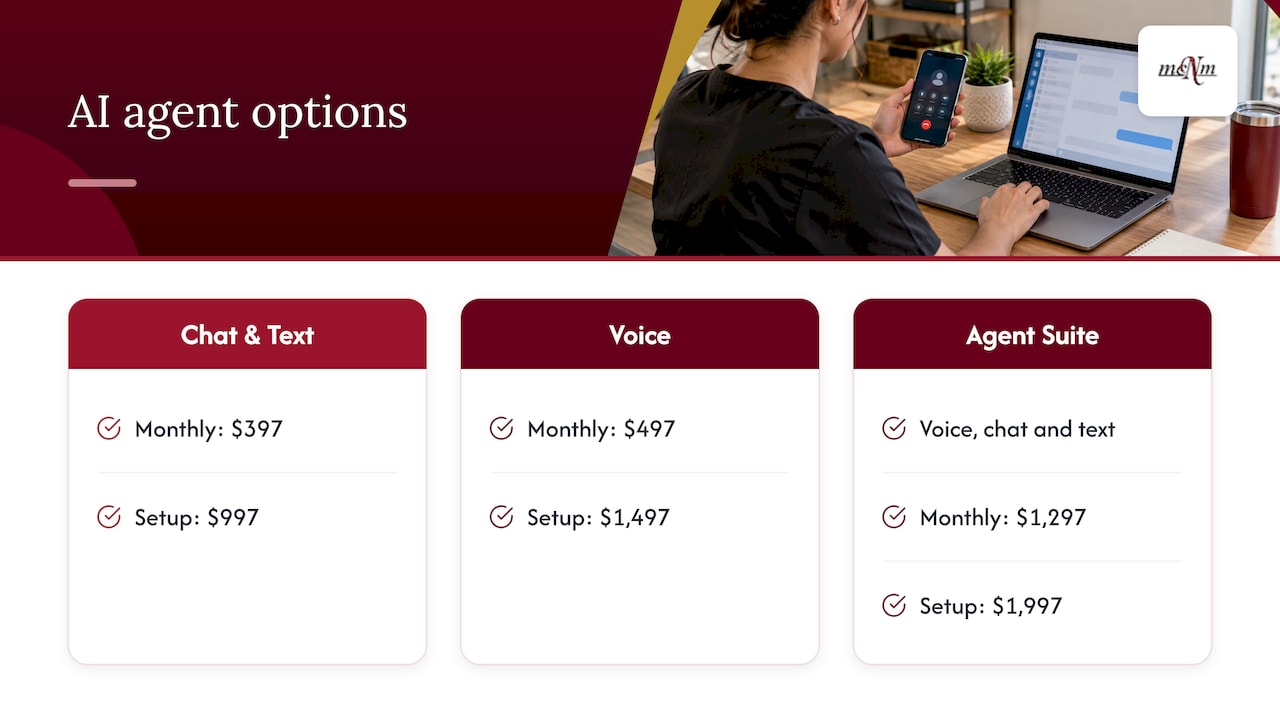
We offer both. The AI Chat & Text Agent is $397 per month plus a $997 setup fee. The AI Voice Receptionist is $497 per month plus a $1,497 setup fee. The AI Agent Suite, which covers voice, chat and text together, is $1,297 per month plus a $1,997 setup fee. You can compare them on our AI agent pricing page.
Setting up AI human handoff in Las Vegas, step by step
Here is the routine we suggest for a service business. It takes an afternoon of thinking and a few test calls.
Step 1: Decide who catches the handoff
Name a person, not “the office.” For a two-truck HVAC company in North Las Vegas, that might be the owner by day and an on-call tech after 5 p.m. For a larger team, it is a dispatcher or front-desk lead.
The biggest handoff failure is simple: nobody is assigned, so nobody responds.
Step 2: Set your hours and your backup
List when a live person is available. Then write what happens outside those hours. The AI might book a callback, text the customer a confirmation and send you a morning summary.
For tourism businesses in Sedona, Flagstaff and Prescott, this matters even more. Demand comes in waves. A tour operator may get dozens of messages on a holiday weekend, many of them at night from visitors planning ahead. Your AI handles the volume, and your team handles the questions that need judgment.
Step 3: Write your trigger list
Use the section above as your starting point. Add anything specific to your trade. A roofer might add “active leak.” A med spa might add “any medical question.” A law-adjacent or financial business may want a person on every intake.
Step 4: Write the handoff line
The words the AI uses matter. Keep them short, honest and kind:
“I want to make sure you get the right help. I’m bringing in a member of our team now, and I’ll pass along what you told me so you don’t have to repeat it.”
Avoid pretending the AI is a person. Say plainly that you are connecting them with a teammate.
Step 5: Send alerts where your team will see them
A summary that lands in an inbox nobody checks is useless. Send it by text or push alert to the phone your catcher carries. Put the key facts in the first line.
If you want these alerts tied into your lead tracking, our marketing automation and CRM services connect calls, texts and follow-up in one place.
Step 6: Test it with real scenarios
Before going live, run at least five test conversations:
- A simple booking.
- A caller who demands a person.
- An angry caller.
- A question the AI should not know.
- A call outside your normal hours.
Check that the right person got the alert, that the summary was accurate and that the customer heard a clear message. Fix what is off and test again.
Step 7: Review weekly for the first month
Spend 15 minutes each week reading handoff transcripts. Look for patterns. If the AI keeps passing along the same question, add the answer. If it hands off too little, tighten the triggers.
Rules to follow when AI talks to your customers
Two rules are worth knowing in the U.S.
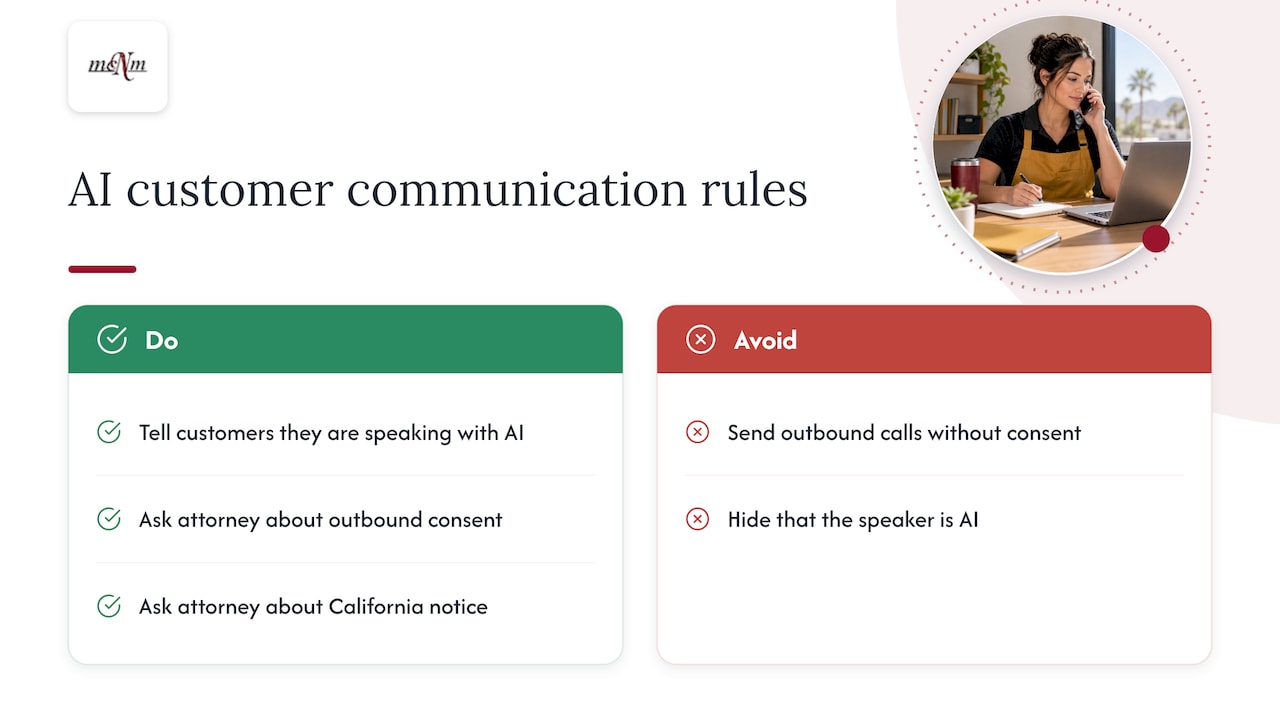
First, the FCC has ruled that robocalls made with AI-generated voices count as “artificial” voices under the Telephone Consumer Protection Act (TCPA), the federal law that governs automated calls and texts. You can read the agency’s announcement on AI-generated voice robocalls. In plain terms, this targets AI calls you start on your own to people who have not agreed to hear from you. An AI that answers calls customers make to you is a different situation. It is still smart to talk with your attorney about consent rules for any outbound calls or texts you send.
Second, be honest about who is talking. Customers should know they are speaking with an AI assistant. That is good practice, and it builds trust when the handoff comes.
California and Nevada also have their own rules on call recording and privacy. If you serve Southern California, ask your attorney what notice your callers should hear.
Common handoff mistakes
These are the ones that cost local businesses jobs.
- No human behind the handoff. The AI says “a teammate will call you” and nobody does.
- Making the customer repeat everything. Always pass the summary.
- Hiding the human option. If a person has to dig through menus to reach someone, they leave.
- Handing off too late. If the AI has failed twice, the third try should be a person.
- Handing off too early. If every call goes to your team, you have paid for an AI and still answer everything yourself. Tune your triggers.
- Skipping the after-hours plan. Evening and weekend leads need a clear next step.
- Never reading the transcripts. They show you exactly what customers ask.
How to tell if your handoff works
Track a few simple numbers each month:
- Handoff rate: the share of conversations passed to a person. Too high means the AI needs more training. Too low might mean it is holding on to conversations it should release.
- Response time after handoff: how long until a human replies. Aim for minutes during business hours.
- Booked jobs from handoffs: how many ended as scheduled work.
- Customer complaints: any mention of the bot, the wait or having to repeat information.
We judge marketing by leads, calls and revenue, so these numbers matter more than how clever the AI sounds. They tell you whether the system makes you money.
AI agents with human handoff in Las Vegas, Southern California and Northern Arizona
We built our AI agents for local service businesses that cannot afford to miss a lead. They answer every lead around the clock and include human handoff, so your team steps in when a customer needs a person.
Here is how the pieces fit together by business type:
| Business | Typical situation | Where the human steps in |
|---|---|---|
| Las Vegas HVAC or plumbing | Emergency calls at night | Urgent jobs and angry callers |
| Henderson home services | Estimate requests while crews are on site | Large projects and custom quotes |
| Southern California contractors | Many chat and text inquiries | Pricing and scheduling conflicts |
| Sedona and Flagstaff tour or lodging | Seasonal message surges | Group bookings and special requests |
| Multi-location franchises | Many locations, one brand voice | Location-specific questions |
The same AI can handle the first touch for each of these. The human handoff keeps the personal part of your business personal.
Perspective: why we build handoff in from day one
We have worked with service businesses since 2016, and the pattern repeats. Owners lose jobs when the phone rings and nobody picks up. Then they lose a second batch of jobs when a clumsy bot makes a customer feel ignored.
That is why we treat the handoff as part of the product, not an extra. Our AI agents answer every lead, 24/7, and they hand the conversation to a person when it matters. The customer feels helped, and you get the lead with context.
We also publish every price. Setup fees and monthly costs are on our site, so you know what you will pay before we talk. And every engagement starts with a free marketing audit, so we look at your calls, your Google presence and your follow-up before we suggest anything.
If you are choosing between an AI that answers and an AI that answers and knows when to bring you in, pick the second one. Your customers will notice the difference.
Michael O. Franklin Jr.
Get AI human handoff running for your business
If you want an AI receptionist that answers every call and hands off cleanly, start with our AI Voice Receptionist at $497 per month plus a $1,497 setup fee. If most of your leads arrive by text and web chat, the AI Chat & Text Agent is $397 per month plus a $997 setup fee. Want both? The AI Agent Suite is $1,297 per month plus a $1,997 setup fee.

We set up the agent, and human handoff is part of it. Browse all options on our AI agent pricing page. If you want to see how much missed calls cost you first, try the Missed Call Calculator. You can also read how an AI receptionist compares with an answering service in our AI receptionist cost guide.
FAQ
What is AI human handoff?
AI human handoff is when an AI receptionist or chatbot passes a customer to a real person. A good handoff includes the customer’s details and a summary of what was said. The customer does not have to repeat anything.
When should a chatbot hand off to a human?
Hand off when the customer asks for a person, sounds upset, needs a custom quote or mentions an emergency. Also hand off when the AI is unsure of the answer. For safety issues like gas smells or fire, the AI should tell the caller to dial 911 first.
What happens if nobody is available to take the handoff?
Your setup needs a backup plan. The AI can take a message, book a callback time and text the customer a confirmation. You then get a summary so you can follow up first thing. Set this up before you go live.
Can AI human handoff work after hours?
Yes. The AI answers any time, so the lead is never lost. After hours, it can pass urgent jobs to your on-call person and queue the rest with a clear callback time. Customers get an honest answer instead of voicemail.
How much does an AI agent with human handoff cost?
Our AI Chat & Text Agent is $397 per month plus a $997 setup fee. The AI Voice Receptionist is $497 per month plus a $1,497 setup fee. The AI Agent Suite is $1,297 per month plus a $1,997 setup fee. Call (702) 608-4226 or request a free marketing audit to find the right fit.
Leave a Reply