
Missed call text back is a feature that automatically sends a text message to a caller when you miss their call. You turn it on in your phone system, write a short message, test it, and every missed call gets a reply in seconds.
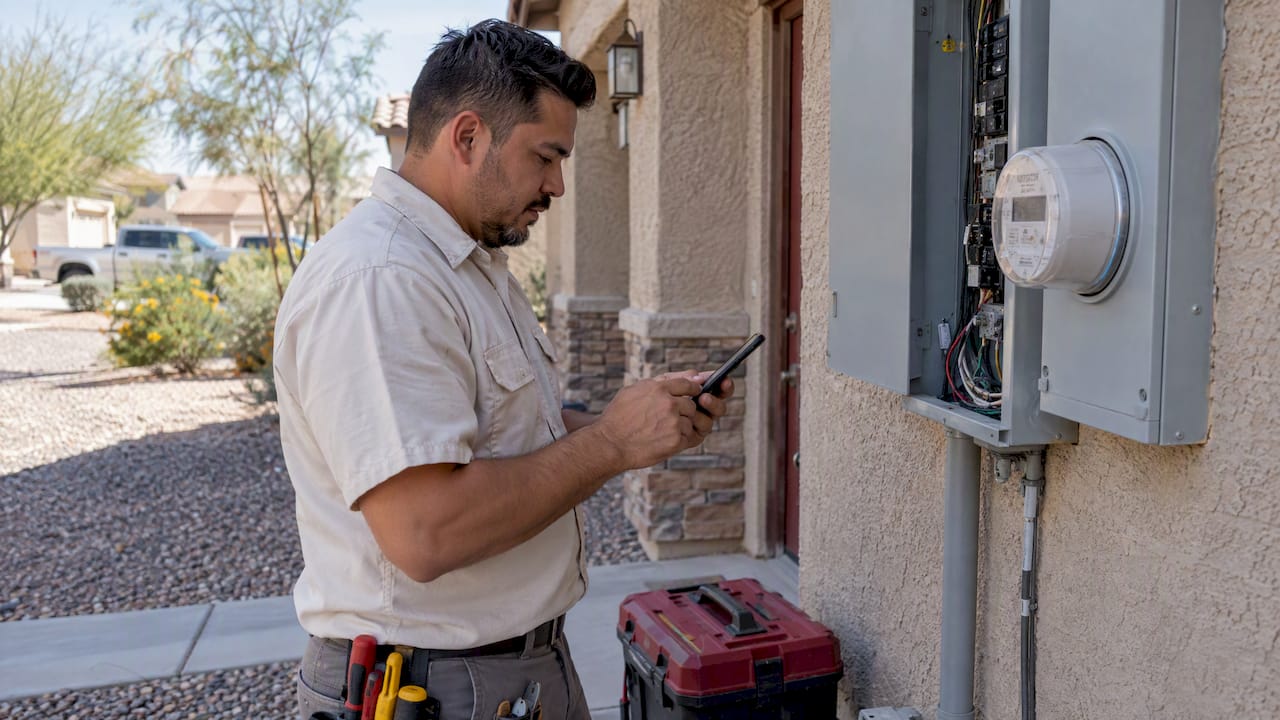
That reply matters. A plumber on a roof, an HVAC tech in an attic or a salon owner with her hands in a client’s hair cannot answer every call. A text that says “we saw your call, how can we help?” keeps the lead warm until you can step in.
TL;DR
- Missed call text back sends an automatic text to anyone whose call you did not answer, per HighLevel’s own documentation.
- Setup takes four moves: turn the feature on, customize the message, send a test, save.
- The best first text is short, names your business, and asks one easy question.
- Texting a caller who just phoned you is a common practice, but consent and opt-out rules apply. Honor every STOP request right away.
- Add a wait step or filter so one caller does not get the same text again and again.
Table of Contents
- What missed call text back is
- How the automation works, step by step
- Why it matters for local service businesses
- What the first text should say
- What happens when the caller replies
- How to set up missed call text back
- Is missed call text back legal?
- Common mistakes to avoid
- Our view: the text is the start, not the system
- Missed call text back in Las Vegas and beyond
- FAQ
- Next step
- Sources
What missed call text back is
When a call goes unanswered, the system sends the caller a text from your business number. HighLevel describes it as a feature that automatically sends a text message to a caller when their inbound call is missed. The caller sees a normal text on their phone and can reply.
People also call it missed call text back automation, because no one on your team has to type anything. The software does the first step for you.
It is not a voicemail replacement. It works alongside voicemail. Some callers hate leaving a message. Almost everyone reads a text.
How the automation works, step by step
Here is the flow from the caller’s side and yours:
- A customer calls your business number.
- No one answers, or the line is busy, or it is after hours.
- The system sees the missed call and sends your preset text within seconds.
- The caller replies. The reply lands in a shared inbox, not on one person’s cell phone.
- You or your team answer the text, or an automated flow asks a few questions first.
- The conversation turns into a booked estimate, a service call or a quote.
The key is that the number being called is tied to a system that can send texts. That can be a business line inside a CRM, or a forwarding number that routes calls through it. Your regular cell phone plan alone usually cannot do this on its own.
Why it matters for local service businesses
People with a broken water heater or a dead AC call the next business on the list when no one picks up. Speed decides who gets the job. We cover that idea in depth on our speed to lead page.
Think of two roofing companies in Henderson. Both show up in Google. One lets the call ring out. The other sends a text within seconds that says they are on a job and will call back. The second company is still in the conversation when the first one calls back an hour later.
This fits businesses that miss calls for good reasons:
- Plumbers, electricians and HVAC techs working on site
- Landscapers and pool services in Las Vegas and Phoenix-area heat, working outdoors
- Med spas, salons and dental offices with a client in the chair
- Tour operators and guides in Sedona and Flagstaff who are out on the trail during peak season
- Home service companies in Orange County and San Diego with one person on the phones
Want to know what your own misses cost? Plug your numbers into our free Missed Call Calculator. It estimates lost revenue from unanswered calls using your call volume and average job value.
What the first text should say
Keep it to one or two sentences. Include four things: your business name, a reason you missed the call, a promise, and one question the caller can answer with a few words.
Here are example messages you can adapt.
General service business
Hi, this is Desert Air Heating & Cooling. Sorry we missed your call, we’re on a job right now. What can we help you with? We’ll reply as soon as we can.
After hours
Thanks for calling Sunrise Pool Care. We’re closed for the night, but we saw your call. Reply with what you need and we’ll get back to you first thing in the morning.
Emergency-friendly
Hi, it’s Valley Plumbing. We missed your call. Is this an emergency like a leak or no water? Reply YES and we’ll call you right back.
Appointment business
Hi from Red Rock Dental. We missed your call. Want to book a visit? Reply with a day that works and we’ll confirm a time. Reply STOP to opt out.
The business names above are made-up examples. Swap in your own.
What makes a first text work
- Use your name. Callers should know who is texting.
- Be human. “Sorry we missed you” reads better than “Your call has been logged.”
- Ask one question. “What do you need help with?” gets more replies than a long menu.
- Skip links at first. A bare link in a first text can look like spam.
- Add opt-out language where your carrier or consent policy calls for it.
What happens when the caller replies
A reply is a live lead. Decide in advance who handles it and how fast.
There are two common paths:
Human reply. The reply shows up in a shared inbox and pushes a notification to your phone. You answer in your own words. This works well for smaller teams that can reply within minutes.
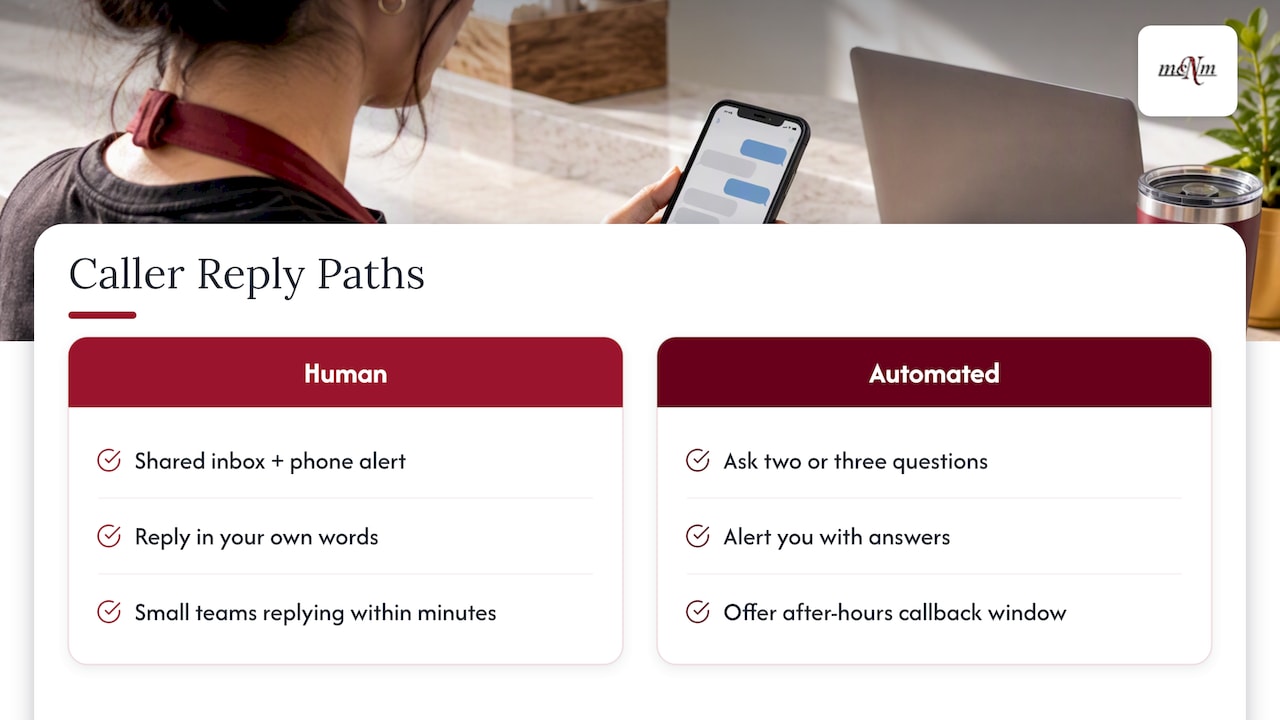
Automated qualifying, then handoff. A flow asks two or three short questions: what service, what address or zip code, and when. Then it alerts you with the answers in one place. After hours, it can offer a callback window.
A sample thread:
Business: Hi, it’s Desert Air. We missed your call. What can we help with?
Caller: AC stopped blowing cold.
Business: Sorry to hear that. What’s your zip code, and is it running at all right now?
Caller: 89117. Running but warm.
Business: Thanks. A tech will call you in about 10 minutes.
Whatever you choose, keep a human in reach. If a caller asks for a person, a person should answer. This is also where an AI chat agent or voice receptionist can help, since it covers the hours your team cannot. See our AI marketing agents for how that handoff works.
How to set up missed call text back

The exact screens depend on your platform. In HighLevel, the steps are simple. Its guide says setup means enabling the feature in Phone System settings, customizing the message, sending a test, and saving.
Here is the full checklist we use with local service businesses:
- Pick your number. Decide which business line callers dial. It must be a number your system can text from.
- Get the number registered for texting. U.S. carriers expect business texting to be registered. Your platform will walk you through it. Plan for this step to take some time before you launch.
- Turn the feature on. Open your phone system settings and enable missed call text back.
- Write the message. Use one of the templates above. Keep it short.
- Send a test. HighLevel recommends sending a test from the message editor and reviewing how it appears to customers. Then call your own line from a different phone and let it ring out.
- Stop repeat texts. If one person calls three times in ten minutes, they should not get three texts. HighLevel suggests customizing a workflow with a wait step or filters such as call-count tags.
- Set alerts. Make sure replies notify the right person by app, email or text.
- Save and go live. Then check results weekly.
If you would rather not build this yourself, our GoHighLevel setup page explains how we do it for clients.
What to check in the first two weeks
- Did every test call trigger a text?
- Did the text arrive from the right number and name?
- Did replies reach the right person fast?
- Did anyone get a duplicate text?
- How many texts turned into booked jobs?
That last number is the one that counts. Track missed calls, replies and booked jobs, not just texts sent.
Is missed call text back legal?
The short answer: it is widely used, but you still have to follow texting rules. This is general information, not legal advice. Ask a qualified attorney about your own setup.
The main federal law is the Telephone Consumer Protection Act (TCPA). Per the FCC, it generally requires prior express consent for robocalls and robotexts, unless an emergency or an exemption applies. The FCC’s April 2025 order states that consent revoked by any reasonable method is definitively revoked, and the sender may not send further robocalls or robotexts without an exemption.
The same order delayed a requirement to apply a revocation to unrelated future messages until April 11, 2026. That date has passed, so plan as if it applies.
What this means in practice:
- Honor opt-outs fast. If someone replies STOP, or says “don’t text me” in plain words, stop texting them.
- Keep the text about their call. A reply to a call they made is different from a marketing blast. Do not add promotions to the first message.
- Do not spam. One text per missed call, not a stream of follow-ups.
- Keep records. Save the call log, the message and any opt-out.
- Check state rules. Nevada, California and Arizona each have their own telemarketing and quiet-hours rules. Ask your attorney which apply.
The TCPA is a place where small mistakes get expensive. A short review by a lawyer who knows telemarketing law is worth it before you launch anything beyond the basic reply.
Common mistakes to avoid
- Sending a long message. A wall of text gets ignored.
- Using a no-reply number. If callers cannot answer, you lose the point.
- Never testing. Always call your own line first.
- Letting replies sit. A fast text followed by a slow reply is worse than nothing.
- Texting repeatedly. Use a wait step or tags.
- Ignoring opt-outs. Treat every one as final.
- Forgetting after-hours. Set a message that says when you will reply.
Our view: the text is the start, not the system
We have built websites since 2004, and one thing has stayed the same: a lead is only worth something if someone answers it. We judge every plan by calls, leads and revenue, so we care what happens after the click.
Missed call text back is one of the cheapest ways to fix a leaky front door. But we tell clients not to treat it as a magic trick. It works best when it sits inside a simple system: a tracked phone number, a shared inbox, a clear owner for every reply, and a CRM that records the job. Without those, you get a fast first text and a slow second step.
For most Las Vegas, Henderson and North Las Vegas contractors we talk to, the right order is simple. Fix missed calls first. Then add review requests. Then work on getting found. Every call you answer is a call you did not pay for twice.
— Michael O. Franklin Jr.
Missed call text back in Las Vegas and beyond
If you run a service business in Las Vegas, Henderson, North Las Vegas, Southern California or Northern Arizona, we can set this up for you. We use GoHighLevel and HubSpot for marketing automation and CRM work, and we build the text-back flow, the shared inbox and the follow-up steps together.
Our published pricing for the related pieces:
| Offer | Price |
|---|---|
| GoHighLevel Quick-Start Setup (plus HighLevel plan) | $997 one-off |
| MCNM Growth CRM (plus $497 setup) | $297 per month |
| AI Chat & Text Agent (plus $997 setup) | $397 per month |
| AI Voice Receptionist (plus $1,497 setup) | $497 per month |
The quick-start setup is the fit if you want missed call text back running on a clean account. The AI agents fit if you also want calls and texts answered after hours. See every plan on our pricing page, or read about our marketing automation and CRM services.

Not sure where you are losing leads? Start with a free marketing audit. We look at your calls, your Google presence and your follow-up, then tell you where to fix first. You can also run our free Local SEO Checkup to see how visible you are in local search.
FAQ
How do you text back when you missed a call?
You can reply by hand from your phone, but it is slow and easy to forget. Missed call text back automates it. The system sends a text from your business number as soon as the call goes unanswered, so the caller hears from you within seconds.
What is the missed call text back feature?
It is a setting that sends an automatic text to a caller when their inbound call is missed, as HighLevel’s help guide explains. You write the message once. The system sends it every time a call is missed.
Is missed call text back legal?
It is a common business practice, but the TCPA and the FCC’s consent rules still apply. Keep the text tied to the call, honor every opt-out, and avoid promotions in the first message. Ask a qualified attorney to review your setup, since state rules differ.
How do I set up missed call text back in GoHighLevel?
Open your Phone System settings, enable the feature, edit the message, send a test and save. Then add a wait step or tags to stop repeat texts. Our GoHighLevel setup page shows how we handle it for clients.
How fast should I reply when someone answers the text?
As fast as you can. The text buys you a short window, and the reply is where you win the job. Set a phone alert so a live person sees every reply, and review our speed to lead guidance for targets.
Next step
Ready to stop losing jobs to unanswered calls? Book your free marketing audit or call us at (702) 608-4226. We are at 5450 W Sahara Ave Ste 320, Las Vegas, NV 89146. You can also see your numbers first with the Missed Call Calculator.
Sources
- Where and how to configure the Missed Call Text Back feature (HighLevel Support)
- FCC order on TCPA rules and revocation of consent, DA 25-312 (April 7, 2025)
Leave a Reply