

Digital marketing in the healthcare industry means using search, websites, ads, email, social and video to help patients find your practice and book care, while following privacy rules like HIPAA. Start with search, because most patients begin there, then add the channels you can track and protect.
This guide is for practice owners and managers, including clinics, dental offices, therapy practices and specialists in Las Vegas, Henderson, Southern California and Northern Arizona. It covers what to do, what the rules say and how to measure it.
TL;DR
- Search is the front door. In one 2026 survey, 84.1% of US consumers used search engines for health questions.
- Healthcare marketing has to follow HIPAA and the FTC Act. Tracking tools and forms are where practices most often slip.
- Measure patients and booked visits, not clicks. Most healthcare teams still struggle to tie spend to outcomes.
- Start small: a fast website, a complete Google Business Profile, reviews, one tracked ad campaign and a fast response to every call.
- Get your free local visibility score first, then fix the biggest gap.
Table of Contents
- What digital marketing includes in healthcare
- Why patients start with search
- Trust is the real channel
- The rules: HIPAA, the FTC and where practices slip
- Channels that work for a local practice
- Answer every call, text and form
- How to measure results
- An example of strategy in action
- Our perspective
- Get a plan built for your practice
- A 90-day starting plan
- Common mistakes
- FAQ
- Next step
- Sources
What digital marketing includes in healthcare
The term covers more than ads. According to Tulane University’s School of Public Health and Tropical Medicine, digital healthcare marketing includes:
- Websites and search engine optimization
- Pay-per-click ads and search engine marketing
- Content marketing
- Email and social media marketing
- Influencer marketing
- Video ads and streaming or internet radio ads
Tulane also notes that digital results are easier to track than traditional marketing results. That matters in a field where every dollar needs to show a patient at the end.
For a local practice, think of it as five jobs:
- Be found when someone searches for care nearby.
- Look trustworthy once they land on your page.
- Make booking easy on a phone.
- Answer every call, text and form fast.
- Prove which of these brought in patients.
Why patients start with search
Patients often search before they ask anyone. The eMarketer report The Healthcare Consumer 2026 surveyed 2,138 US consumers. It found 84.1% use search engines for health-related questions, and 65.1% start there. Social, video and AI tools are growing, but search still leads.
What does that mean for a practice in Henderson or Flagstaff? A person types “urgent care near me” or “pediatric dentist Henderson.” The practices that show up in the map results and have clear, recent reviews get the call. Practices that do not show up never get the chance.
This is why local SEO sits at the center of our healthcare advice:
- Google Business Profile: correct name, address, phone, hours, services and photos.
- Location pages: one page per city you serve, with real details about that area.
- Service pages: one page per treatment, written in plain words a patient would use.
- Reviews: a steady flow of honest patient reviews, with timely replies.
Want to see where you stand? Run the free Local SEO Checkup and see how your practice looks to people searching nearby.
Trust is the real channel
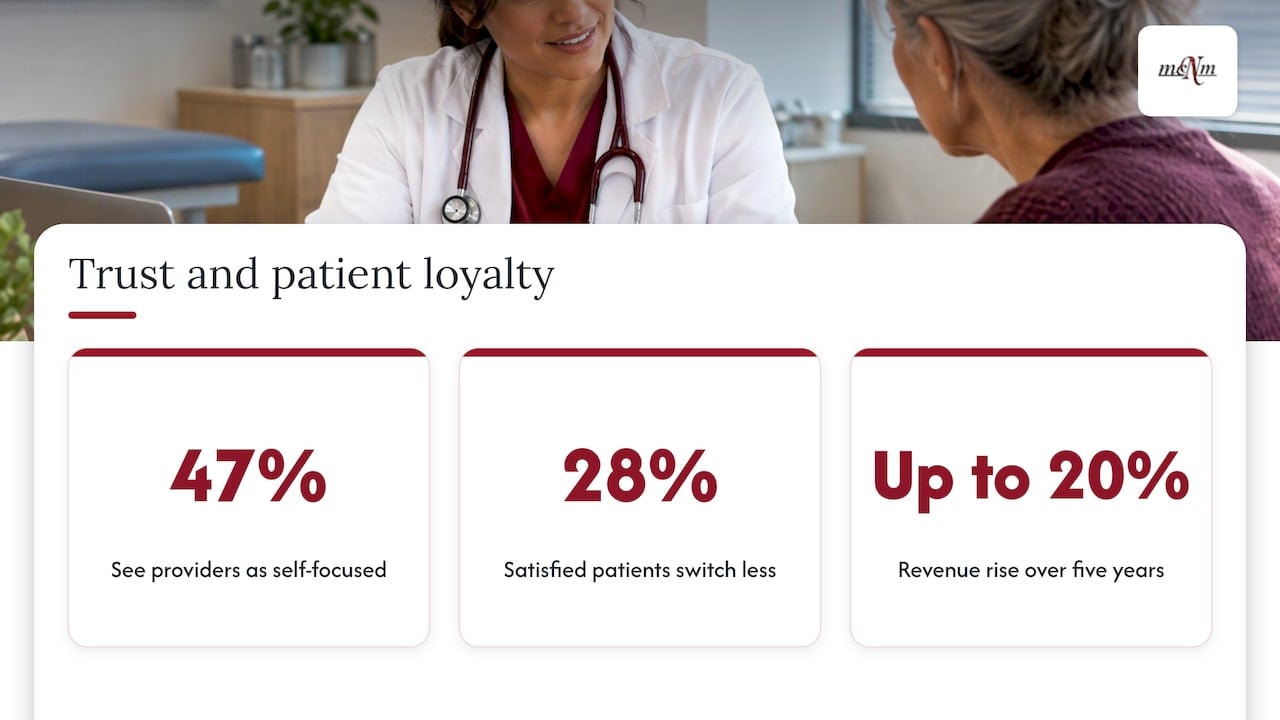
Health decisions are personal. Patients weigh trust more than they do when they buy a pool service or a plumber. A Salesforce survey cited by Invoca found 47% of consumers believe healthcare providers focus more on their own needs than on patient needs. Good digital marketing helps change that view by answering real questions clearly.
The experience also affects loyalty. A 2021 McKinsey survey of more than 3,000 US healthcare consumers found satisfied patients are 28 percent less likely to switch providers. McKinsey also reports that providers who improved the consumer experience saw revenue rise by up to 20 percent over five years.
So marketing does not end when the patient clicks. It continues through the call, the booking, the reminder and the follow-up.
The rules: HIPAA, the FTC and where practices slip
This is the part that makes healthcare different. Read it before you launch anything.
HIPAA marketing rules
According to HHS.gov, the HIPAA Privacy Rule generally requires a patient’s written authorization before a covered entity uses or discloses protected health information for marketing. There are exceptions, such as a face-to-face conversation or a promotional gift of nominal value.
In plain terms: do not use patient information in marketing unless you have the right authorization. That includes patient names, photos, treatment details and email lists built from patient records.
The FTC Act also applies
HHS explains that the FTC Act prohibits deceptive or unfair acts in commerce. It applies to HIPAA-covered entities and business associates, and to companies outside HIPAA too. The same page says it is false or misleading to claim you are “HIPAA Compliant” or “HIPAA Certified” when that is not true. Keep your website claims accurate and easy to support.
Tracking tools and forms
The biggest risk for most practices is not the ad copy. It is the tracking. Ad pixels, analytics tags and web forms can pass visitor data to outside platforms. Whether that data counts as protected health information depends on the facts, so this is a question for your compliance officer or healthcare attorney before you install anything.
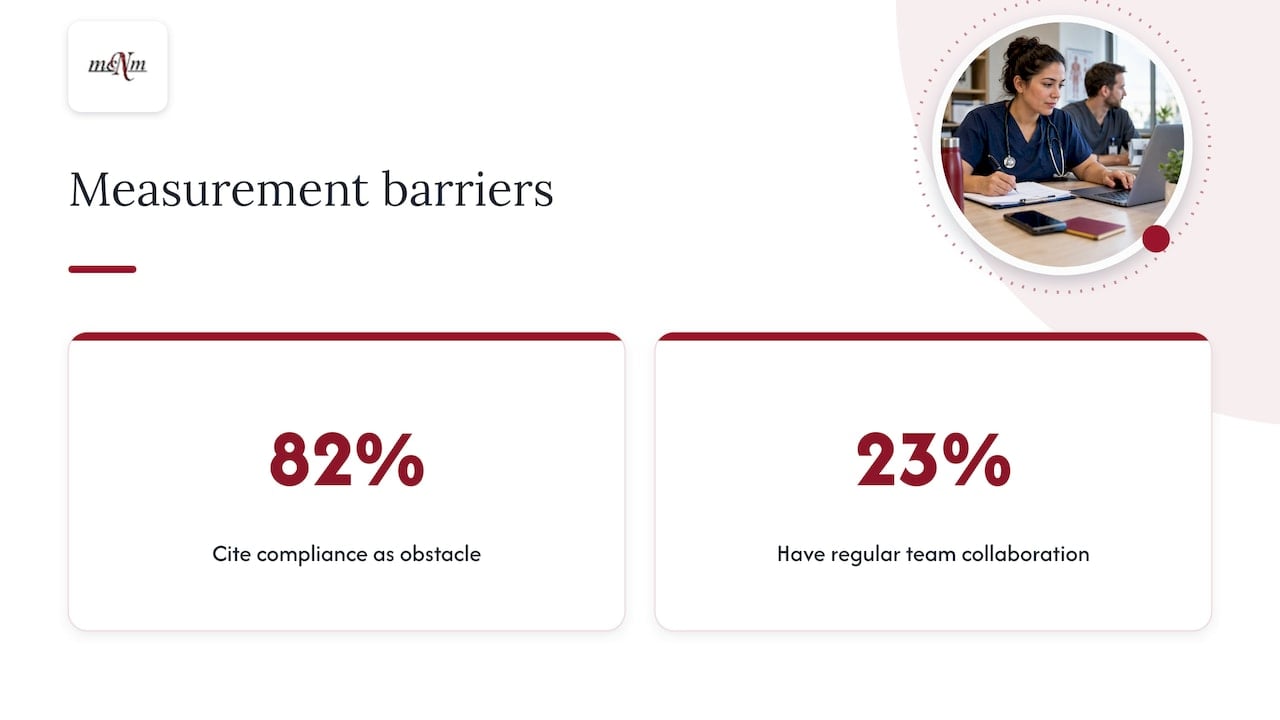
The Freshpaint State of Healthcare Marketing 2026 report surveyed 200 healthcare marketing leaders. It found 82% cite compliance and legal limits as their biggest measurement obstacle. Only 23% have set up regular teamwork between marketing, IT and compliance.
A simple fix: put those three people in one monthly meeting. Before any new form, call tracker, chat tool or ad tag goes live, compliance signs off.
State rules may apply as well, such as state medical board advertising rules in Nevada, California or Arizona. Check with your licensing board or attorney for your specialty.
Channels that work for a local practice
Not every channel fits every practice. Here is how we would rank them for a single-location or small group practice in the Southwest.
| Channel | Best for | What to watch |
|---|---|---|
| Local SEO and Google Business Profile | Almost every practice | Keep details accurate and current |
| Google Ads (search) | Services with clear demand, such as dental, urgent care, physical therapy | Track booked appointments, not clicks |
| Website and landing pages | Every practice | Speed on mobile, clear booking button |
| Reviews and reputation | Every practice | Never post patient details in replies |
| Email and text reminders | Established patients | Authorization and consent rules |
| Video and social | Education, trust, recruiting | Use only content with patient permission |
Search ads
Paid search puts you in front of people who are ready to book. Cost per click in healthcare can be high, so tight targeting matters. Target the city, the treatment and the hours when your front desk can answer. Our Google Ads management is a flat $1,497 per month, plus ad spend.
Your website
Your site is the place every channel sends people. Make it load fast on a phone. Put the phone number and a booking button at the top. List insurance you accept, hours and the address. Write each service page for a worried reader: what happens, what to expect, who to call.
Reviews
A recent, steady stream of reviews is a quiet sales team. Picture two dental offices in Las Vegas with similar skills. One has 200 reviews, the latest from last week. The other has 40, the latest from last year. Most patients call the first one. Ask every happy patient, and reply to reviews without confirming that the reviewer is a patient or sharing any detail about care.
Answer every call, text and form
Healthcare callers are often anxious or in pain. If no one picks up, they call the next office. Front desks get busy at lunch, during check-in and after hours.
Estimate what that costs you. Our free Missed Call Calculator turns your missed calls into a monthly dollar figure.
Automation can help, such as a text-back that says you received the call and will respond soon. With AI voice or chat agents, be careful. If a tool collects symptoms, names or insurance details, it may handle protected health information. Ask your compliance officer or attorney what agreements and settings you need before using one, and limit it to scheduling and general questions.
How to measure results
Most healthcare marketers struggle here. The Freshpaint 2026 report found 59% of healthcare marketing teams can connect only 10 to 25 percent of spend to real patient outcomes, and just 1% can connect more than half. Cost per acquisition was the most tracked metric at 23%, followed by cost per attended appointment at 20%.
The Blueshift healthcare playbook adds another point. It says to measure beyond engagement and track operational results such as fewer no-shows and better appointment adherence.
A simple scorecard for a local practice:
- Calls: total, answered, missed
- Booked appointments by source (search, map listing, ads, referral)
- Cost per booked appointment for paid campaigns
- Show rate: booked versus attended
- Reviews: new per month and average rating
- Search visibility: map ranking for your top five services in each city
Review it monthly. If a number does not lead to a decision, drop it.
An example of strategy in action
Large systems show what a focused campaign can do. In an IQVIA and Penn Medicine case study from April 2026, a patient-centered breast cancer treatment campaign reported a 91% increase in click-through rate, an 86% increase in lead generation and a 95% increase in patient visits. The study also reports service line growth of 16 to 22 percent.
The same study says a rapid access program cut the average time from intake to a nurse visit to 2.0 days, against a baseline of 7 to 14 days. The lesson for a small practice is not the size of the budget. It is that marketing worked best when the patient experience behind it also got faster.
Our perspective
We run marketing like an operator. Every plan we build starts with Search Console, call data and conversion data, and we judge it by leads, calls and revenue, not by vanity numbers.
That approach fits healthcare well. A practice does not need louder ads. It needs to be found in the right city, look trustworthy in the first five seconds and answer the phone. Local SEO, a clean Google Business Profile, steady reviews and a tracked Google Ads campaign cover most of that.
We also believe in published prices. You should know what local SEO costs before you talk to anyone. Our Local SEO Starter is $997 per month, and every engagement starts with a free marketing audit.
For regulated work, we keep the rules in front. Your compliance officer or attorney decides what can be tracked and collected. We build the marketing plan around those limits, not around them.
Michael O. Franklin Jr.
Get a plan built for your practice
If you want help turning this into a plan, we start with a free marketing audit that shows where your site, map listing and calls stand. Our published plans include Local SEO Starter at $997 per month, Growth SEO & Content at $1,997 per month and the Review Generation Engine at $397 per month.
If you want to fix your map listing first, the Google Business Profile Sprint is $997 one-off. If your site is slow or dated, see our website design and build service. We serve Las Vegas, Henderson, North Las Vegas, Southern California and Northern Arizona.
A 90-day starting plan
- Days 1 to 14: Check the basics. Run the Local SEO Checkup. Confirm your name, address and phone match everywhere. Fix your Google Business Profile.
- Days 15 to 30: Fix the website. Speed up mobile pages, add a booking button and write one clear page per top service.
- Days 31 to 45: Set the rules. Meet with compliance. List every form, tracker and tool. Approve or remove each one.
- Days 46 to 60: Build reviews. Add a simple ask to checkout. Reply to every review in a way that protects privacy.
- Days 61 to 90: Launch one campaign. Pick one high-demand service in one city. Track calls and booked visits.
After 90 days, review your scorecard and decide what to scale.
Common mistakes
- Using patient stories without authorization. Get written permission first.
- Installing tags without review. Check every pixel and form with compliance.
- Claiming “HIPAA compliant” casually. The FTC treats false claims as deceptive.
- Counting clicks instead of patients. Track booked and attended appointments.
- Ignoring after-hours calls. Set up a text-back or a safe after-hours process.
- One page for every city. Build real pages for Las Vegas, Henderson, North Las Vegas or wherever you actually serve.
FAQ
What is digital marketing in healthcare?
It is the use of online channels to connect providers with patients. That includes SEO, ads, websites, email, social media and video. It also includes privacy rules, because patient information is protected.
Does HIPAA apply to healthcare marketing?
Yes. HHS says the Privacy Rule generally requires written authorization before using protected health information for marketing, with limited exceptions. The FTC Act applies too. Ask your compliance officer or healthcare attorney about your situation.
Which channel should a small practice start with?
Start with local SEO and your Google Business Profile, because most patients begin with search. Then add reviews and a fast website. Paid search comes next, once you can track booked appointments.
How do I measure healthcare marketing?
Track calls, booked appointments, cost per booked appointment, show rate and reviews. Tie each number to a source. Review them monthly and keep what drives patients.
Next step
Ready to see where your practice stands? Request your free marketing audit at mcnmmarketing.com or call (702) 608-4226.
Sources
- The Healthcare Consumer 2026, eMarketer
- What Is Healthcare Marketing?, Tulane University
- Digital Marketing for Healthcare: A Road Map for Success, Invoca
- Marketing in healthcare: Improving the consumer experience, McKinsey
- Marketing, HHS.gov
- HIPAA and the FTC Act, HHS.gov
- State of Healthcare Marketing 2026 Report, Freshpaint
- Healthcare Marketing Playbook, Blueshift
- Creative That Performs, IQVIA and Penn Medicine
Leave a Reply