Advanced Google SEO for 2026: The Kingdom Entrepreneur’s Complete Search Domination Guide
Google’s 2026 algorithm rewards experience, authority, and trust above all else. Here is the complete advanced SEO playbook built specifically for Kingdom entrepreneurs and Las Vegas businesses ready to dominate search.
Google’s core mission has never changed — connect people with the most relevant, trustworthy answer to their question as fast as possible. What changed is how precisely Google can execute that mission. In 2026, Google’s systems are sophisticated enough to evaluate not just what your page says, but who wrote it, what they know, how people behave on your site after landing, and whether your entire online presence is consistent with the expertise you claim.
For Kingdom entrepreneurs, this is actually good news. The manipulable tactics that drove results in 2015 — keyword stuffing, spammy backlinks, thin content — no longer work. What works now is exactly what Kingdom business has always been built on: genuine expertise, honest communication, real relationships, and consistent delivery of value. Google’s algorithm has, in many ways, caught up to Kingdom operating principles.
The three biggest shifts in Google’s 2026 ranking systems are the full maturation of the Helpful Content system (which demotes entire sites — not just pages — that exist primarily to rank rather than to help), the expansion of E-E-A-T signals into every ranking evaluation, and the integration of AI-generated overviews that require your content to be answer-ready at the sentence level.
The E-E-A-T Framework: Experience, Expertise, Authoritativeness, Trust
E-E-A-T is not a ranking factor in the traditional sense — there is no E-E-A-T score Google directly measures. It is a framework Google’s quality raters use to evaluate whether a page deserves to rank, and it informs how the algorithm’s machine learning models are trained to identify quality. Understanding it at a deep level is the foundation of modern SEO strategy.
Experience: Proof You Were Actually There
Google added the first E (Experience) to the framework in 2022 because it recognized that first-hand experience produces qualitatively different content than research alone. A review written by someone who actually used the product contains sensory details, unexpected observations, and honest assessments that AI-generated or research-based content cannot replicate. For Kingdom entrepreneurs, this means writing from your actual client work, your real outcomes, your genuine failures and recoveries. The specificity of experience is what signals authenticity to both Google and readers.
Expertise: Demonstrated Knowledge Depth
Expertise is demonstrated through content depth, accuracy, and the ability to address not just surface-level questions but the follow-up questions that only someone who truly knows the subject would anticipate. Your author bio, your credentials, your years of documented practice in your field — all of these contribute to expertise signals. For MCNM Marketing, our HubSpot and Adobe certifications, our A+ BBB rating, and our documented track record of client results across 45+ clients are expertise signals that reinforce every piece of content we publish.
Authoritativeness: What the Rest of the Web Says About You
Authoritativeness is largely determined by external signals — who links to you, who mentions you, what publications reference your work. This is why link building strategy matters, but more importantly why your off-page presence must be consistent with your on-page claims. If you say you are a leading digital marketing agency in Las Vegas, Google looks for evidence of that claim across the web: press mentions, directory listings, client references, social proof.
Trust: The Dominant Signal
Google explicitly states that Trust is the most important element of E-E-A-T. Trust is evaluated through a combination of site security (HTTPS), privacy policy presence, accurate contact information, transparent authorship, honest advertising practices, and the overall gap (or absence of one) between what you promise and what you deliver. For Kingdom businesses, trust is not an SEO strategy — it is an operating standard. The SEO benefit is a downstream consequence of genuine trustworthiness.
Technical SEO Foundations That Still Matter in 2026
Technical SEO is the foundation that determines whether Google can efficiently crawl, index, and render your content. No amount of great content compensates for a technically broken site. The good news is that most technical SEO fundamentals have been stable for years — the urgency is not in learning new tricks, but in actually executing the fundamentals consistently.
Core Web Vitals: Your Speed Report Card
Google’s Core Web Vitals — Largest Contentful Paint (LCP), Interaction to Next Paint (INP), and Cumulative Layout Shift (CLS) — are confirmed ranking signals for both mobile and desktop. LCP measures how fast your main content loads. INP measures how quickly your page responds to user interaction. CLS measures how much the page visually shifts as it loads. For WordPress sites on NitroPack’s Ludicrous mode (as mcnmmarketing.com runs), these scores are dramatically improved by default. But the bigger culprits — unoptimized images, render-blocking third-party scripts, Elementor bloat — require ongoing vigilance.
Free For Las Vegas Businesses
Free Kingdom Marketing Blueprint
Our AI system generates leads 24/7. Book a free strategy session to see it work for your business.
Googlebot has a crawl budget — a limit to how many pages it will crawl on your site per day. For sites with hundreds or thousands of pages, this matters enormously. Every parameterized URL, every thin archive page, every URL with query strings that generates duplicate content is wasting crawl budget that could be spent on your important pages. A properly configured robots.txt, comprehensive noindex directives on low-value pages, and an XML sitemap that lists only canonical, indexable URLs are the three tools that control crawl efficiency.
Schema Markup: Speak Google’s Language
Schema markup is structured data that tells Google explicitly what your content is, who wrote it, what it is about, and how it relates to other entities. For news publishers, NewsArticle schema with proper author, publisher, datePublished, and headline fields dramatically improves Google’s ability to surface your content in News results, Discover, and AI-generated overviews. For local businesses, LocalBusiness schema with accurate NAP (Name, Address, Phone) creates rich result eligibility. Schema is not optional for competitive SEO in 2026 — it is table stakes.
Content Clusters and Topical Authority: Own Your Niche
Google’s goal is to identify the most authoritative source on any given topic and prioritize that source consistently. The way to become that source is through topical authority — comprehensive coverage of a subject area through a network of interlinked content that collectively signals deep expertise.
The content cluster model structures this strategically. A pillar article covers a broad topic comprehensively — it is the definitive resource on the subject. Cluster articles cover specific subtopics in depth and link back to the pillar. The pillar links to each cluster. This internal linking architecture tells Google that your site has a coherent, expert-level body of knowledge on a subject — and that all of it originates from your domain.
For MCNM Marketing, our content clusters are organized around Kingdom Entrepreneurship, Digital Marketing Strategy, Local SEO for Las Vegas, Google Ad Grants for Nonprofits, and WordPress Development. Each cluster has a pillar article and is supported by 8-15 cluster articles that collectively establish topical authority in each area. This is how a Las Vegas marketing agency competes with national players for high-value search terms — not by trying to outspend them, but by out-publishing them on the specific topics that matter to our clients.
Local SEO for Las Vegas: Dominating the Market You Actually Serve
Local SEO is one of the highest-ROI investments a Las Vegas business can make because the competition for local search terms — while real — is dramatically less intense than for national terms, and the buyer intent behind local searches is exceptionally high. Someone searching “digital marketing agency Las Vegas” is not researching the concept of digital marketing — they are looking for someone to hire.
The Google Business Profile (GBP) is the single most important local SEO asset. A fully optimized GBP with accurate NAP, correct business category, complete service listings, weekly posts, and active review management drives local pack rankings more than almost any other factor. For businesses at 5450 W. Sahara Ave in Las Vegas — which places them in a high-visibility commercial corridor — the geographic signals are strong. Consistent NAP across all directories (Yelp, BBB, Chamber of Commerce, industry directories) reinforces those signals.
Location-specific content is the other half of local SEO. Creating pages and posts that target Las Vegas-specific search terms — not just generic marketing terms — builds local topical authority. Mentioning neighborhoods, local landmarks, local events, and local organizations in your content creates geographic relevance signals that generic content cannot provide.
Kingdom Link Building: Earning Links Through Service
Backlinks remain one of Google’s strongest ranking signals because a link from another site is a vote of confidence — an editorial endorsement that your content is worth referencing. The challenge is that link building done badly (buying links, reciprocal link schemes, low-quality directory submissions) now carries real ranking penalties. Kingdom link building is different: it focuses on earning links through genuine value creation.
The most effective Kingdom link building strategies are creating genuinely useful resources that others naturally reference, building relationships with complementary businesses and publications in your space, contributing expert commentary to industry publications, and serving your community in ways that generate press coverage. For nonprofits and ministries we serve, links from grant databases, charity navigators, and community organizations carry significant authority. For business clients, links from chambers of commerce, trade associations, and local media provide the geographic and topical authority signals that improve local and national rankings simultaneously.
AI Search and Google’s Search Generative Experience: The New Frontier
Google’s AI-generated overviews now appear above traditional organic results for a significant and growing percentage of queries. For SEO professionals, this creates both a challenge and an opportunity. The challenge is that AI overviews can answer questions without requiring a click — reducing traffic to individual pages. The opportunity is that the sources Google’s AI cites in its overviews receive extraordinary brand visibility and credibility signals.
To be cited in AI overviews, your content needs to be structured for machine consumption. This means clear, direct answers at the sentence level. It means FAQ sections with question-and-answer format that mirrors how people actually query. It means structured data that explicitly identifies your content’s claims, entities, and relationships. It means being the most authoritative, most trusted source on your subject area — because Google’s AI, like Google’s traditional algorithm, follows authority signals when selecting which sources to cite.
Measuring What Matters: SEO Metrics for Kingdom Entrepreneurs
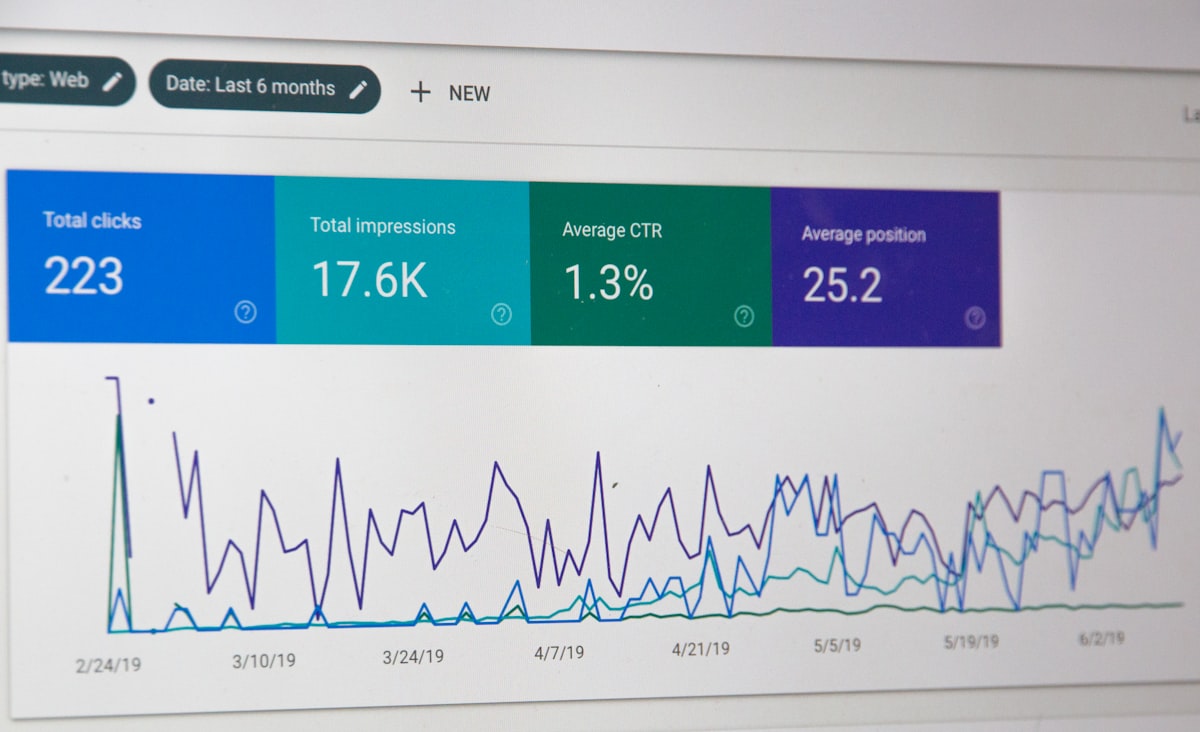
The wrong SEO metrics lead to the wrong decisions. Rankings without context are vanity. Traffic without conversion context is noise. The metrics that actually matter for Kingdom entrepreneurs are organic traffic growth month-over-month for your target keyword clusters, conversion rate from organic search visitors, Google Search Console impression share for your most important queries, Core Web Vitals scores across your key pages, and the business outcomes (leads, calls, form fills, revenue) that trace back to organic search.
At MCNM Marketing, every SEO engagement is measured against business outcomes — not just ranking positions. A first-page ranking that does not produce leads is an incomplete win. We connect Google Search Console, Google Analytics 4, and HubSpot to create a full-funnel view of how organic search drives real business results for our clients across Las Vegas.
The Kingdom entrepreneur’s SEO standard is simple: does your digital presence accurately represent your expertise, serve your audience genuinely, and connect people who need what you offer with the solutions you provide? If yes, Google’s algorithm — which increasingly rewards exactly these qualities — will recognize and reward it. The work is real. The results are real. And the standard is the same one that has governed Kingdom business from the beginning.
Google’s 2026 algorithm rewards experience, authority, and trust above all else. Here is the complete advanced SEO playbook built specifically for Kingdom entrepreneurs and Las Vegas businesses ready to dominate search.
Google’s core mission has never changed — connect people with the most relevant, trustworthy answer to their question as fast as possible. What changed is how precisely Google can execute that mission. In 2026, Google’s systems are sophisticated enough to evaluate not just what your page says, but who wrote it, what they know, how people behave on your site after landing, and whether your entire online presence is consistent with the expertise you claim.
For Kingdom entrepreneurs, this is actually good news. The manipulable tactics that drove results in 2015 — keyword stuffing, spammy backlinks, thin content — no longer work. What works now is exactly what Kingdom business has always been built on: genuine expertise, honest communication, real relationships, and consistent delivery of value. Google’s algorithm has, in many ways, caught up to Kingdom operating principles.
The three biggest shifts in Google’s 2026 ranking systems are the full maturation of the Helpful Content system (which demotes entire sites — not just pages — that exist primarily to rank rather than to help), the expansion of E-E-A-T signals into every ranking evaluation, and the integration of AI-generated overviews that require your content to be answer-ready at the sentence level.
The E-E-A-T Framework: Experience, Expertise, Authoritativeness, Trust
E-E-A-T is not a ranking factor in the traditional sense — there is no E-E-A-T score Google directly measures. It is a framework Google’s quality raters use to evaluate whether a page deserves to rank, and it informs how the algorithm’s machine learning models are trained to identify quality. Understanding it at a deep level is the foundation of modern SEO strategy.
Experience: Proof You Were Actually There
Google added the first E (Experience) to the framework in 2022 because it recognized that first-hand experience produces qualitatively different content than research alone. A review written by someone who actually used the product contains sensory details, unexpected observations, and honest assessments that AI-generated or research-based content cannot replicate. For Kingdom entrepreneurs, this means writing from your actual client work, your real outcomes, your genuine failures and recoveries. The specificity of experience is what signals authenticity to both Google and readers.
Expertise: Demonstrated Knowledge Depth
Expertise is demonstrated through content depth, accuracy, and the ability to address not just surface-level questions but the follow-up questions that only someone who truly knows the subject would anticipate. Your author bio, your credentials, your years of documented practice in your field — all of these contribute to expertise signals. For MCNM Marketing, our HubSpot and Adobe certifications, our A+ BBB rating, and our documented track record of client results across 45+ clients are expertise signals that reinforce every piece of content we publish.
Authoritativeness: What the Rest of the Web Says About You
Authoritativeness is largely determined by external signals — who links to you, who mentions you, what publications reference your work. This is why link building strategy matters, but more importantly why your off-page presence must be consistent with your on-page claims. If you say you are a leading digital marketing agency in Las Vegas, Google looks for evidence of that claim across the web: press mentions, directory listings, client references, social proof.
Trust: The Dominant Signal
Google explicitly states that Trust is the most important element of E-E-A-T. Trust is evaluated through a combination of site security (HTTPS), privacy policy presence, accurate contact information, transparent authorship, honest advertising practices, and the overall gap (or absence of one) between what you promise and what you deliver. For Kingdom businesses, trust is not an SEO strategy — it is an operating standard. The SEO benefit is a downstream consequence of genuine trustworthiness.
Technical SEO Foundations That Still Matter in 2026
Technical SEO is the foundation that determines whether Google can efficiently crawl, index, and render your content. No amount of great content compensates for a technically broken site. The good news is that most technical SEO fundamentals have been stable for years — the urgency is not in learning new tricks, but in actually executing the fundamentals consistently.
Core Web Vitals: Your Speed Report Card
Google’s Core Web Vitals — Largest Contentful Paint (LCP), Interaction to Next Paint (INP), and Cumulative Layout Shift (CLS) — are confirmed ranking signals for both mobile and desktop. LCP measures how fast your main content loads. INP measures how quickly your page responds to user interaction. CLS measures how much the page visually shifts as it loads. For WordPress sites on NitroPack’s Ludicrous mode (as mcnmmarketing.com runs), these scores are dramatically improved by default. But the bigger culprits — unoptimized images, render-blocking third-party scripts, Elementor bloat — require ongoing vigilance.
Free For Las Vegas Businesses
Free Kingdom Marketing Blueprint
Our AI system generates leads 24/7. Book a free strategy session to see it work for your business.
Googlebot has a crawl budget — a limit to how many pages it will crawl on your site per day. For sites with hundreds or thousands of pages, this matters enormously. Every parameterized URL, every thin archive page, every URL with query strings that generates duplicate content is wasting crawl budget that could be spent on your important pages. A properly configured robots.txt, comprehensive noindex directives on low-value pages, and an XML sitemap that lists only canonical, indexable URLs are the three tools that control crawl efficiency.
Schema Markup: Speak Google’s Language
Schema markup is structured data that tells Google explicitly what your content is, who wrote it, what it is about, and how it relates to other entities. For news publishers, NewsArticle schema with proper author, publisher, datePublished, and headline fields dramatically improves Google’s ability to surface your content in News results, Discover, and AI-generated overviews. For local businesses, LocalBusiness schema with accurate NAP (Name, Address, Phone) creates rich result eligibility. Schema is not optional for competitive SEO in 2026 — it is table stakes.
Content Clusters and Topical Authority: Own Your Niche
Google’s goal is to identify the most authoritative source on any given topic and prioritize that source consistently. The way to become that source is through topical authority — comprehensive coverage of a subject area through a network of interlinked content that collectively signals deep expertise.
The content cluster model structures this strategically. A pillar article covers a broad topic comprehensively — it is the definitive resource on the subject. Cluster articles cover specific subtopics in depth and link back to the pillar. The pillar links to each cluster. This internal linking architecture tells Google that your site has a coherent, expert-level body of knowledge on a subject — and that all of it originates from your domain.
For MCNM Marketing, our content clusters are organized around Kingdom Entrepreneurship, Digital Marketing Strategy, Local SEO for Las Vegas, Google Ad Grants for Nonprofits, and WordPress Development. Each cluster has a pillar article and is supported by 8-15 cluster articles that collectively establish topical authority in each area. This is how a Las Vegas marketing agency competes with national players for high-value search terms — not by trying to outspend them, but by out-publishing them on the specific topics that matter to our clients.
Local SEO for Las Vegas: Dominating the Market You Actually Serve
Local SEO is one of the highest-ROI investments a Las Vegas business can make because the competition for local search terms — while real — is dramatically less intense than for national terms, and the buyer intent behind local searches is exceptionally high. Someone searching “digital marketing agency Las Vegas” is not researching the concept of digital marketing — they are looking for someone to hire.
The Google Business Profile (GBP) is the single most important local SEO asset. A fully optimized GBP with accurate NAP, correct business category, complete service listings, weekly posts, and active review management drives local pack rankings more than almost any other factor. For businesses at 5450 W. Sahara Ave in Las Vegas — which places them in a high-visibility commercial corridor — the geographic signals are strong. Consistent NAP across all directories (Yelp, BBB, Chamber of Commerce, industry directories) reinforces those signals.
Location-specific content is the other half of local SEO. Creating pages and posts that target Las Vegas-specific search terms — not just generic marketing terms — builds local topical authority. Mentioning neighborhoods, local landmarks, local events, and local organizations in your content creates geographic relevance signals that generic content cannot provide.
Kingdom Link Building: Earning Links Through Service
Backlinks remain one of Google’s strongest ranking signals because a link from another site is a vote of confidence — an editorial endorsement that your content is worth referencing. The challenge is that link building done badly (buying links, reciprocal link schemes, low-quality directory submissions) now carries real ranking penalties. Kingdom link building is different: it focuses on earning links through genuine value creation.
The most effective Kingdom link building strategies are creating genuinely useful resources that others naturally reference, building relationships with complementary businesses and publications in your space, contributing expert commentary to industry publications, and serving your community in ways that generate press coverage. For nonprofits and ministries we serve, links from grant databases, charity navigators, and community organizations carry significant authority. For business clients, links from chambers of commerce, trade associations, and local media provide the geographic and topical authority signals that improve local and national rankings simultaneously.
AI Search and Google’s Search Generative Experience: The New Frontier
Google’s AI-generated overviews now appear above traditional organic results for a significant and growing percentage of queries. For SEO professionals, this creates both a challenge and an opportunity. The challenge is that AI overviews can answer questions without requiring a click — reducing traffic to individual pages. The opportunity is that the sources Google’s AI cites in its overviews receive extraordinary brand visibility and credibility signals.
To be cited in AI overviews, your content needs to be structured for machine consumption. This means clear, direct answers at the sentence level. It means FAQ sections with question-and-answer format that mirrors how people actually query. It means structured data that explicitly identifies your content’s claims, entities, and relationships. It means being the most authoritative, most trusted source on your subject area — because Google’s AI, like Google’s traditional algorithm, follows authority signals when selecting which sources to cite.
Measuring What Matters: SEO Metrics for Kingdom Entrepreneurs
The wrong SEO metrics lead to the wrong decisions. Rankings without context are vanity. Traffic without conversion context is noise. The metrics that actually matter for Kingdom entrepreneurs are organic traffic growth month-over-month for your target keyword clusters, conversion rate from organic search visitors, Google Search Console impression share for your most important queries, Core Web Vitals scores across your key pages, and the business outcomes (leads, calls, form fills, revenue) that trace back to organic search.
At MCNM Marketing, every SEO engagement is measured against business outcomes — not just ranking positions. A first-page ranking that does not produce leads is an incomplete win. We connect Google Search Console, Google Analytics 4, and HubSpot to create a full-funnel view of how organic search drives real business results for our clients across Las Vegas.
The Kingdom entrepreneur’s SEO standard is simple: does your digital presence accurately represent your expertise, serve your audience genuinely, and connect people who need what you offer with the solutions you provide? If yes, Google’s algorithm — which increasingly rewards exactly these qualities — will recognize and reward it. The work is real. The results are real. And the standard is the same one that has governed Kingdom business from the beginning.
In 2004, a single search for "free money" sparked a journey from digital curiosity to professional mastery. Starting with a basic computer and a drive for success, I founded MCNM LLC, a digital marketing agency built on two decades of evolution in the online landscape.
My career took a pivotal turn when I transitioned from early web hosting platforms to WordPress. Recognizing the platform's untapped potential, I dedicated myself to mastering its architecture. Today, as a Certified WordPress Expert, I have designed and launched over 100 high-performance websites, helping entrepreneurs and businesses translate complex visions into functional, visually compelling digital realities.
At MCNM LLC, we combine technical precision with creative strategy to help clients navigate the ever-changing digital realm. My mission remains the same as it was on day one: to leverage the transformative power of technology to drive innovation and sustainable growth for every brand we touch.
What Las Vegas Businesses Say About MCNM Marketing
Real results from real clients. Powered by our AI-driven Google Reviews automation system.
4.9
★★★★★
Google Rating
0
★★★★★
5-Star Reviews
0
★★★★★
New Reviews/Mo
98%
★★★★★
Satisfaction Rate
JR
James Rodriguez
Owner, Rodriguez HVAC
★★★★★
MCNM Marketing transformed our online presence completely. We went from 8 reviews to 94 in just 6 months. Their AI review automation system is incredible — customers actually leave reviews now!
SM
Sandra Martinez
CEO, Vegas Clean Pros
★★★★★
The WhatsApp review automation is genius. Customers receive a personalized message right after service and 1-in-3 actually leave a review. We're now #1 on Google for "house cleaning Las Vegas"!
DK
David Kim
Owner, Kim's Auto Repair
★★★★★
Michael and the MCNM team built us a complete AI marketing system. Reviews, SEO, social media — all automated. Our call volume doubled in 90 days. Faith-based business done right.
⭐
Leave Us a Google Review
Your review helps Las Vegas businesses find us and helps us serve more people. It takes 30 seconds and means the world to us.
Real results from real clients — A+ BBB Accredited · 14+ Years Experience
5.0
★★★★★
Based on Google Business Reviews
✅ Verified Las Vegas Business
M
Maria G.
Las Vegas, NV · 2 weeks ago
★★★★★
"MC and the team transformed our business. We went from zero online presence to ranking #1 in Las Vegas for our services. The WhatsApp automation alone doubled our bookings!"
J
James T.
Henderson, NV · 1 month ago
★★★★★
"Best investment I made for my business. MCNM Marketing's AI system generates leads 24/7. I'm getting calls and WhatsApp messages even at 2am. ROI in 30 days."
S
Sandra L.
North Las Vegas, NV · 3 weeks ago
★★★★★
"MC Franklin is a genius. Our Google ranking jumped from page 5 to page 1 in 60 days. The faith-based approach and professionalism sets MCNM apart from every agency I've worked with."
Everything you need to know about AI-powered digital marketing for Las Vegas businesses.
MCNM Marketing offers full-service AI-powered digital marketing: Local SEO, Google Ads, WhatsApp Sales Automation, AI Lead Capture Systems, social media marketing, website development, and reputation management. Serving Las Vegas, Henderson, Phoenix, and Los Angeles.
Local SEO packages start at $497/month. Includes Google Business Profile optimization, local keyword targeting, citation building, and monthly reporting. Most clients see results within 60-90 days.
WhatsApp Sales Automation captures leads, responds to inquiries 24/7, and books sales calls automatically through WhatsApp Business. Our AI system includes a 3-step lead capture funnel, automated follow-up sequences, and a call scheduler — resulting in 4x more booked discovery calls.
Most Las Vegas businesses begin seeing ranking improvements within 60-90 days. Competitive #1 rankings typically take 4-6 months. We use AI-driven content, technical SEO, and local citation building to accelerate results.
Yes! Book a FREE 30-minute AI Strategy Session at mcnmmarketing.com or WhatsApp us at (702) 608-4226. We'll create a custom marketing plan with zero obligation.
Absolutely. We specialize in "near me" local SEO for Las Vegas businesses. We optimize your Google Business Profile, build local citations, and implement geo-targeted content to ensure your business appears when customers search near them in Las Vegas, Henderson, and surrounding areas.
MCNM Marketing is a faith-based Royal Priesthood agency with 14+ years experience, A+ BBB rating, and AI-powered automation focus. We combine Local SEO, Google Ads, WhatsApp automation, and AI sales systems into one integrated platform. Clients average 4x more leads and 60% faster response times.